Learning Outcomes
i. Identify the main structures of the human respiratory system.
ii. Understand the function of each part of the air passageway and lungs.
iii. Grasp how the respiratory system facilitates gas exchange with the environment.
i. Main Structures of the Human Respiratory System
The respiratory system is comprised of several structures that work together to facilitate breathing:
Nose and Nasal Cavity: The nose filters, warms, and humidifies the air. The nasal cavity also serves as a resonating chamber for speech.
Pharynx: This part of the throat conducts air from the nasal cavity to the larynx and food from the mouth to the esophagus.
Larynx: The larynx, or voice box, routes air into the respiratory tract and prevents food from entering. It also contains the vocal cords.
Trachea: Also known as the windpipe, the trachea filters the air we inhale and branches into the bronchi.
Bronchi: The bronchi branch into smaller bronchioles in the lungs, distributing air evenly throughout the respiratory organ.
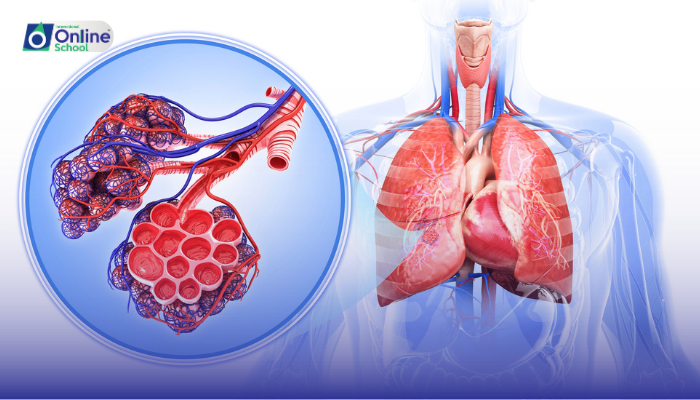
Lungs: These primary organs of respiration house the bronchioles and alveoli where gas exchange occurs.
ii. Function of Air Passageway and Lungs
Air Passageway: The air passageway, including the nose, pharynx, larynx, and trachea, serves as a conduit for air to reach the lungs. It also has important roles in protecting the respiratory tract from harmful substances and in vocalization.
Lungs and Alveoli: The lungs provide a large surface area for gas exchange. The alveoli, tiny air sacs within the lungs, are where oxygen is taken into the body and carbon dioxide is expelled during the process of breathing.
iii. Gas Exchange Process
Oxygen Intake: When we inhale, oxygen-rich air travels down the respiratory tract to the alveoli.
Carbon Dioxide Exhalation: The body's cells produce carbon dioxide as a waste product, which is transported back to the alveoli and expelled when we exhale.
Blood Gas Transport: Oxygen and carbon dioxide are transported to and from the alveoli by the blood. Oxygen binds to hemoglobin in red blood cells, and carbon dioxide is mostly carried in the plasma as bicarbonate ions.
Respiratory System Mechanics
Diaphragm and Intercostal Muscles: These muscles play a key role in the mechanics of breathing by expanding and contracting the thoracic cavity to facilitate airflow.
In conclusion, the human respiratory system's anatomy is intricately designed to perform the essential function of gas exchange, providing oxygen to the body and removing carbon dioxide. Each structure, from the nasal cavity to the alveoli, has a specific role that contributes to the efficient operation of the respiratory process. Understanding these roles is crucial for comprehending how the respiratory system maintains the body's vital functions.
